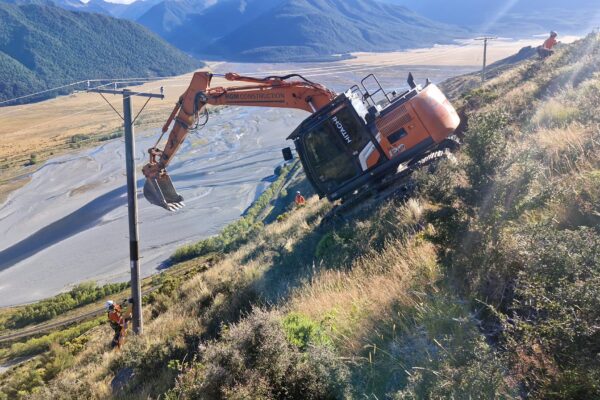
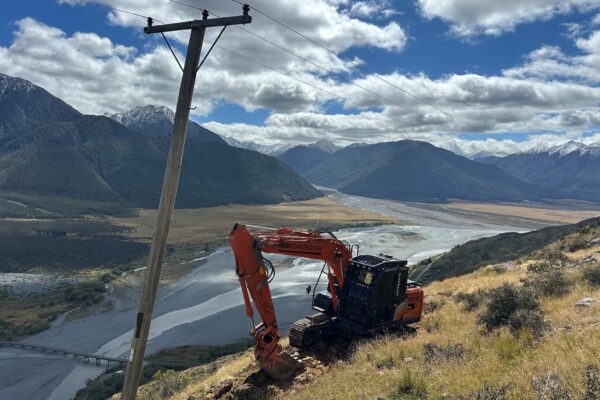
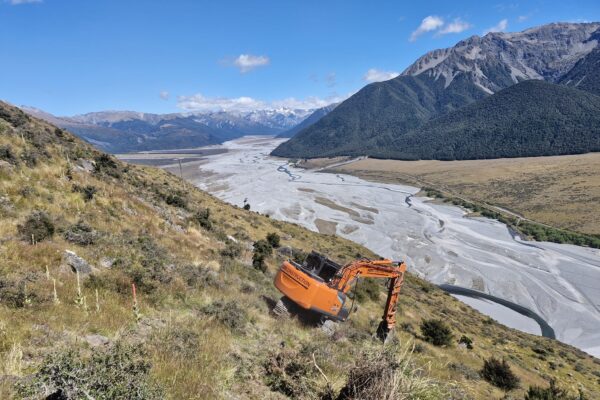
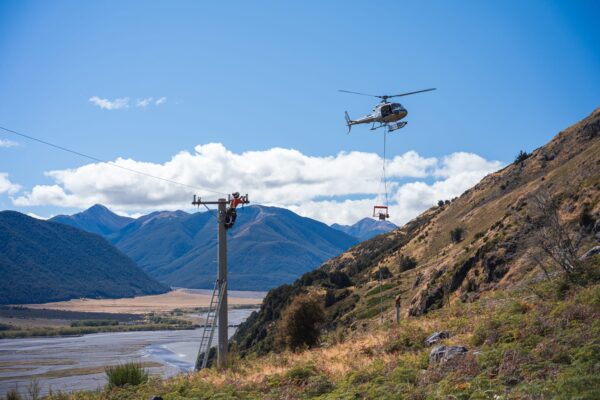
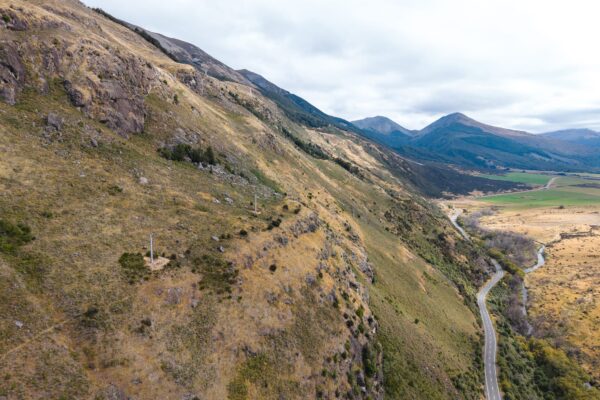
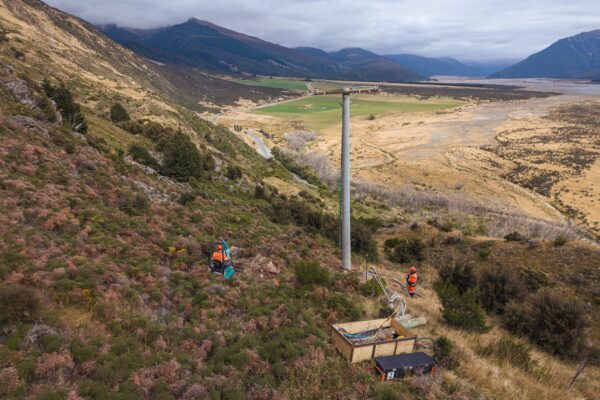
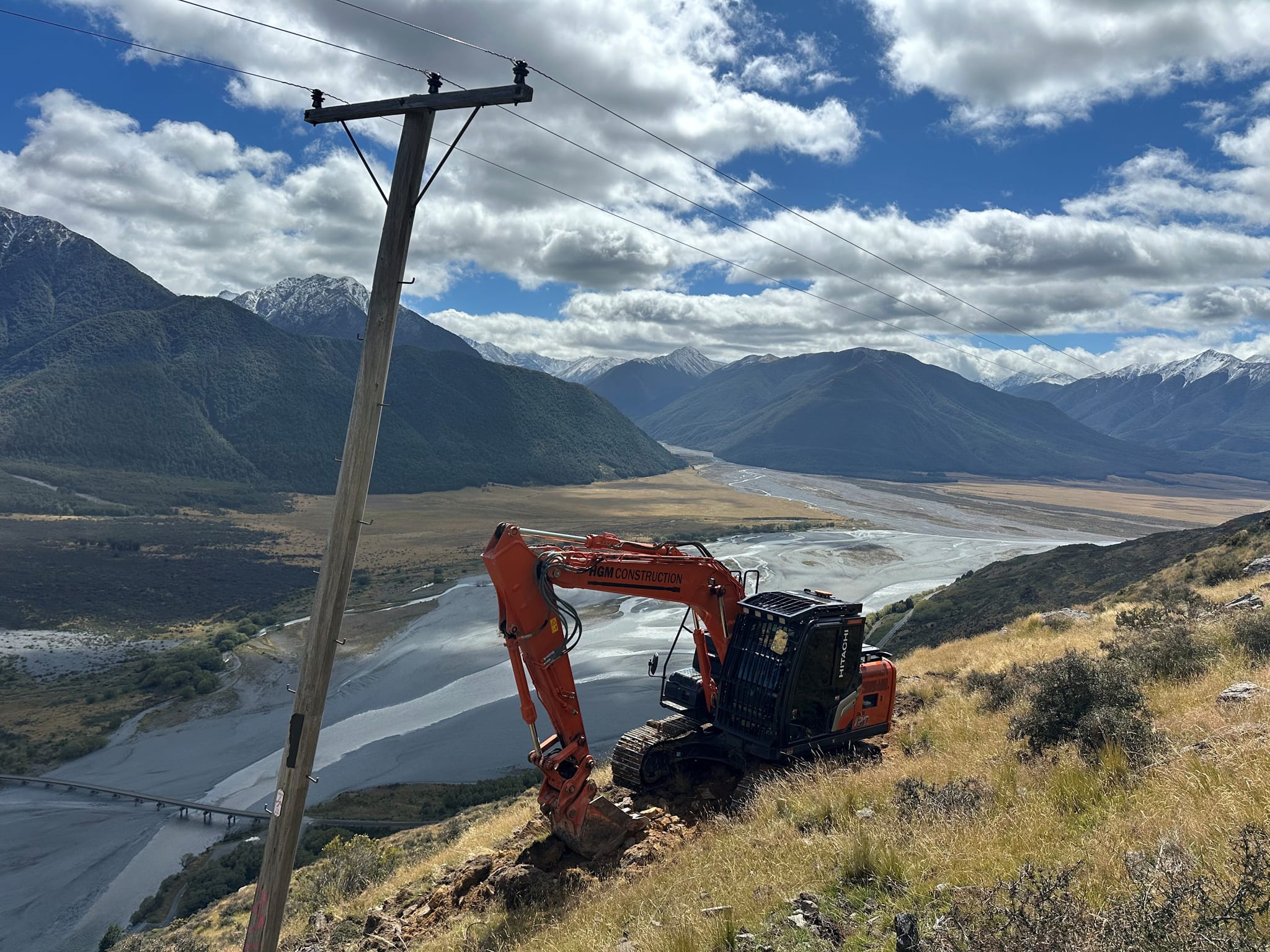
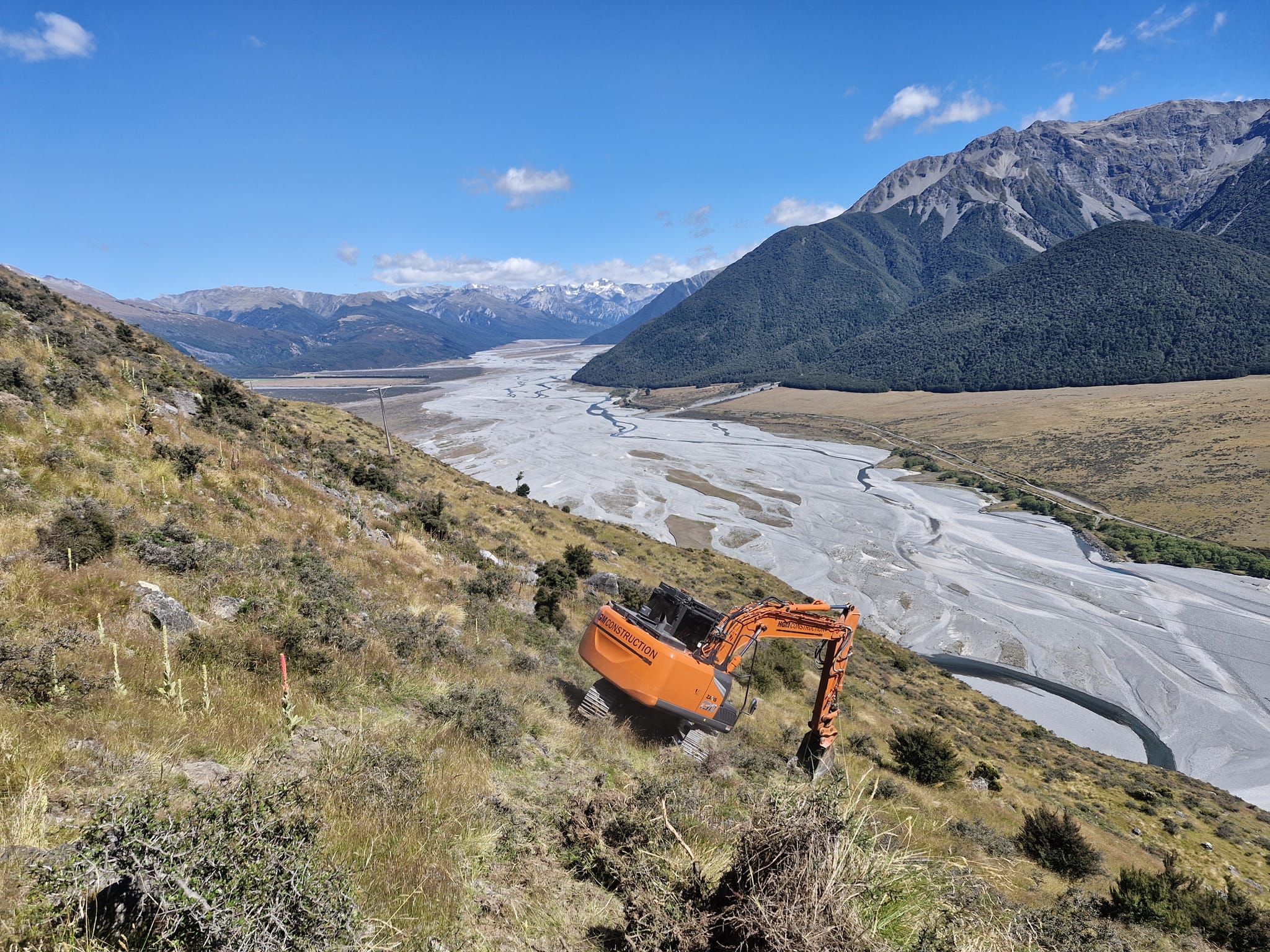
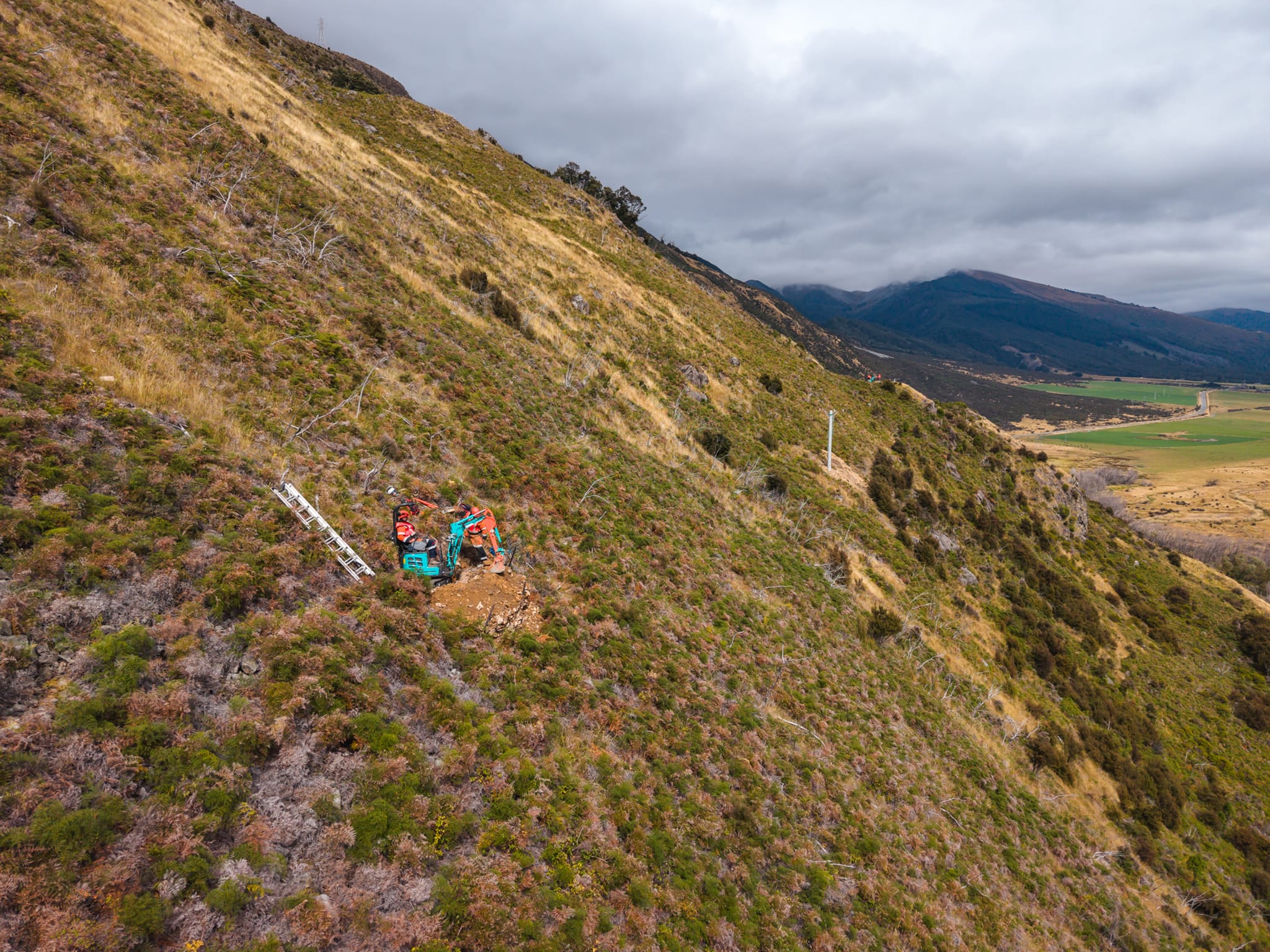
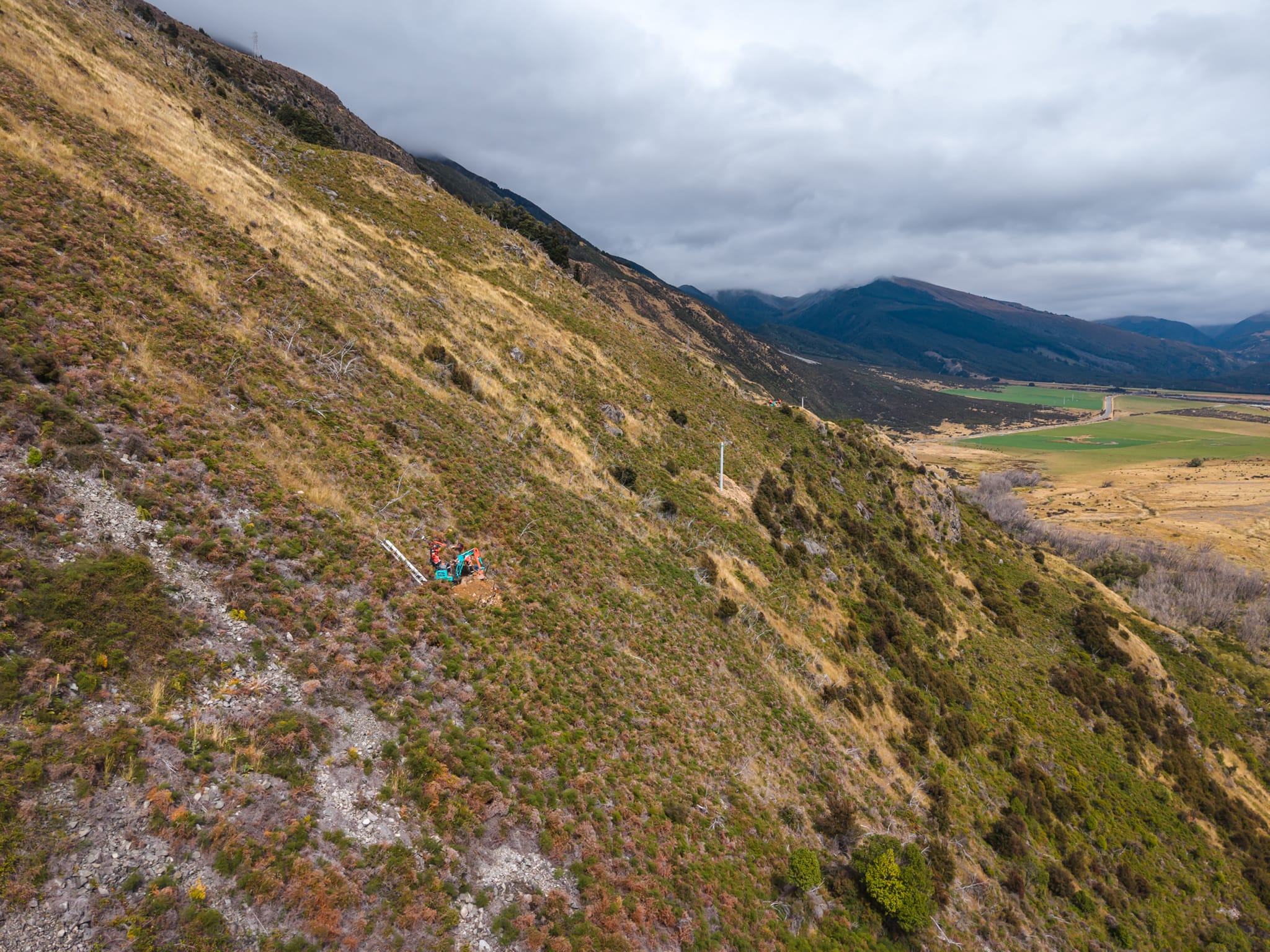
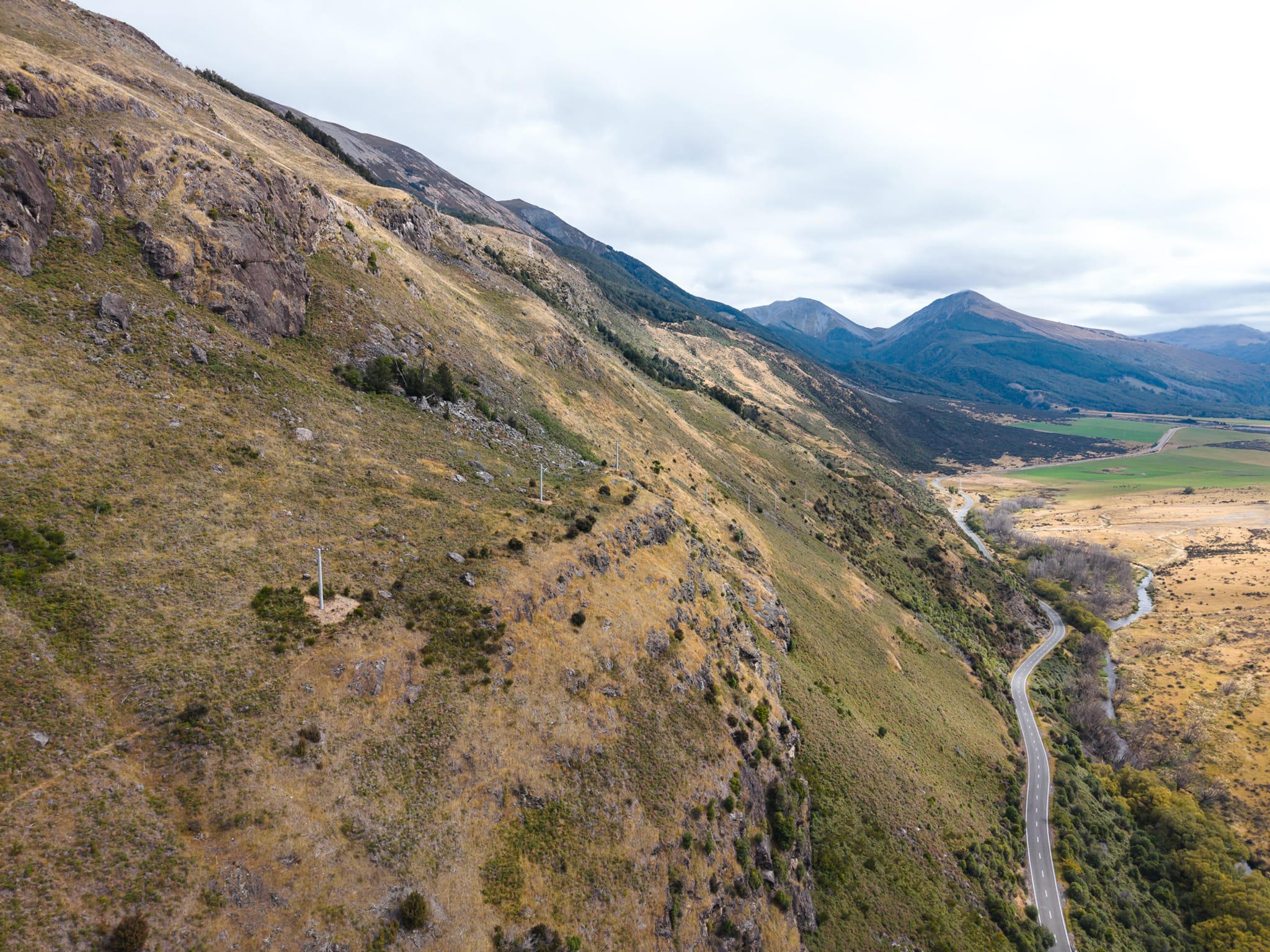
Stretching across approximately 7 kilometres of steep, rocky terrain through a combination of DOC land and private farmland, the Mount Horrible line is one of the most remote and inaccessible sections on Orion’s electricity network. Comprising 72 power poles and supplying a small community at the end of the line, the asset had reached the end of its serviceable life after more than 40 years in operation, requiring a complete rebuild in an exceptionally challenging environment.
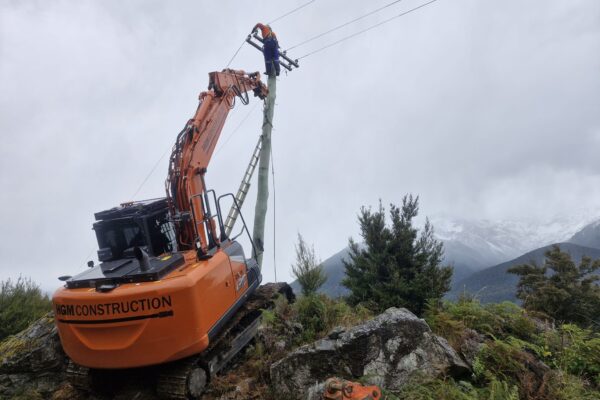
Recognising the complexity of the project, Orion engaged HGM in August 2025 to provide Early Contractor Involvement (ECI), drawing on our expertise and past knowledge of the line to develop practical construction methodologies and access solutions before work commenced. An initial walkover of the line quickly confirmed that no two pole sites were the same. Steep gradients, exposed rock, limited access and environmentally sensitive terrain meant that every location required its own carefully considered construction methodology to ensure the works could be delivered safely, efficiently and with minimal environmental impact.
Planning for Success
Following the successful ECI phase, HGM was formally engaged to partner with Connetics to deliver the civil works associated with the rebuild along with providing arial transport and a heavy lift helicopter.
With Orion agreeing to a four-week long outage window to complete the works, the project demanded meticulous planning and flawless execution. A temporary generator would maintain power to the remote community throughout construction, however the programme allowed minimal tolerance for delays. Every aspect of the project therefore had to be thoroughly planned before the first excavator arrived on site.
Key planning considerations included:
- Ensuring all crews were sufficiently equipped with the helicopter portable plant and equipment required.
- Selecting and engaging a helicopter provider capable of operating safely in steep alpine terrain.
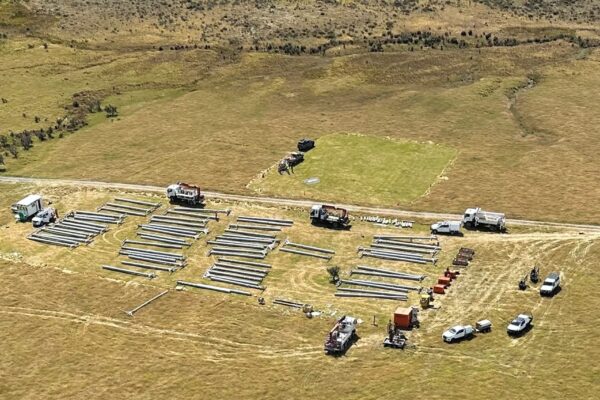
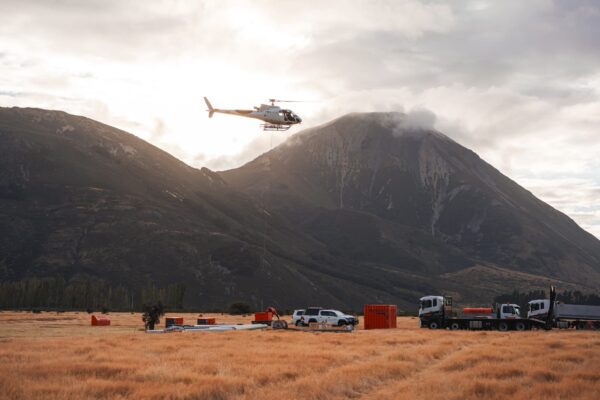
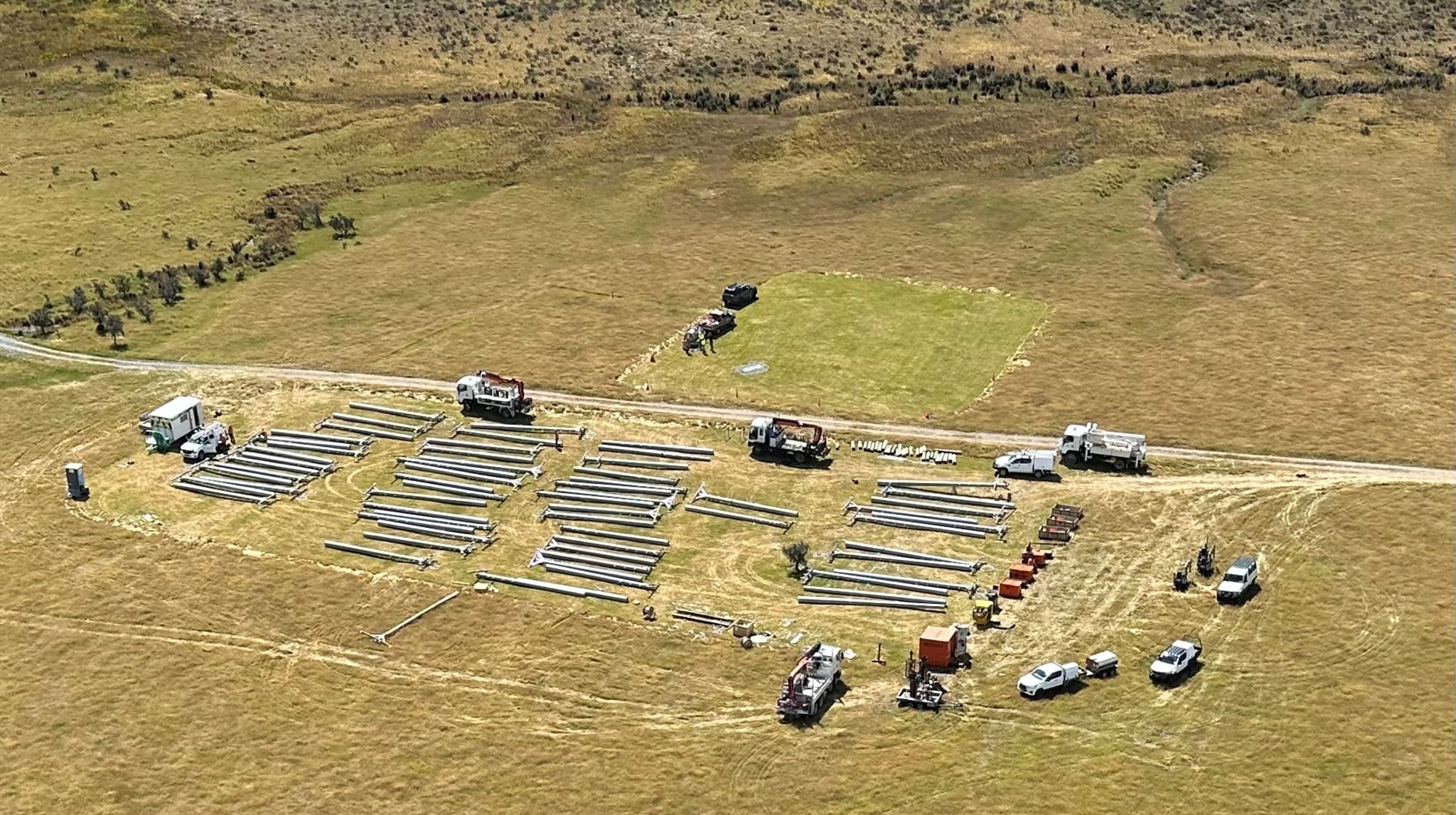
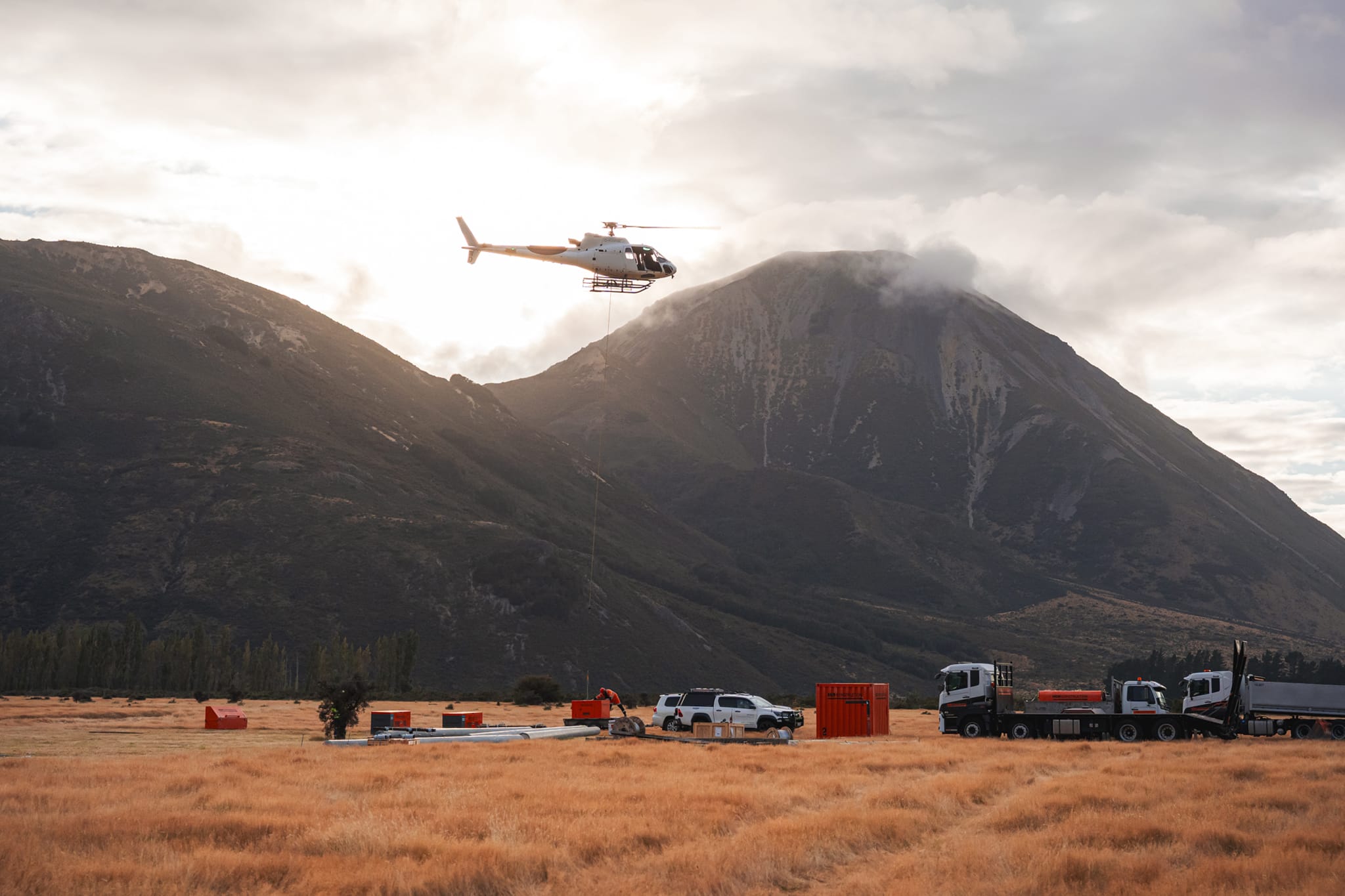
- Establishing a suitable staging area for plant, equipment and pole storage.
- Developing reliable communication systems in an area with limited mobile coverage.
- Protecting environmentally sensitive areas, including native lizard habitat, while preventing contamination and the spread of invasive weeds.
- Managing rockfall hazards for both construction crews and traffic on State Highway 73 below.
- Developing comprehensive fire prevention and emergency response procedures for a high-risk summer environment.
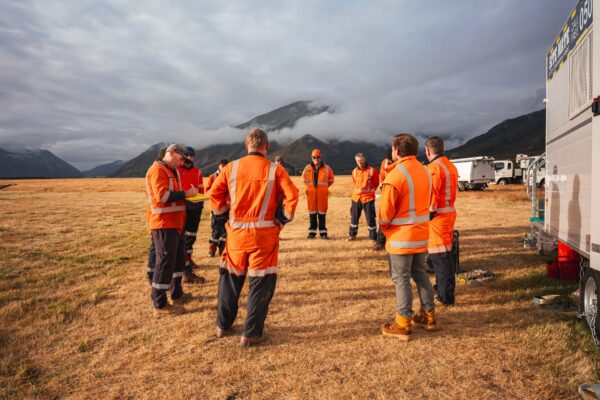
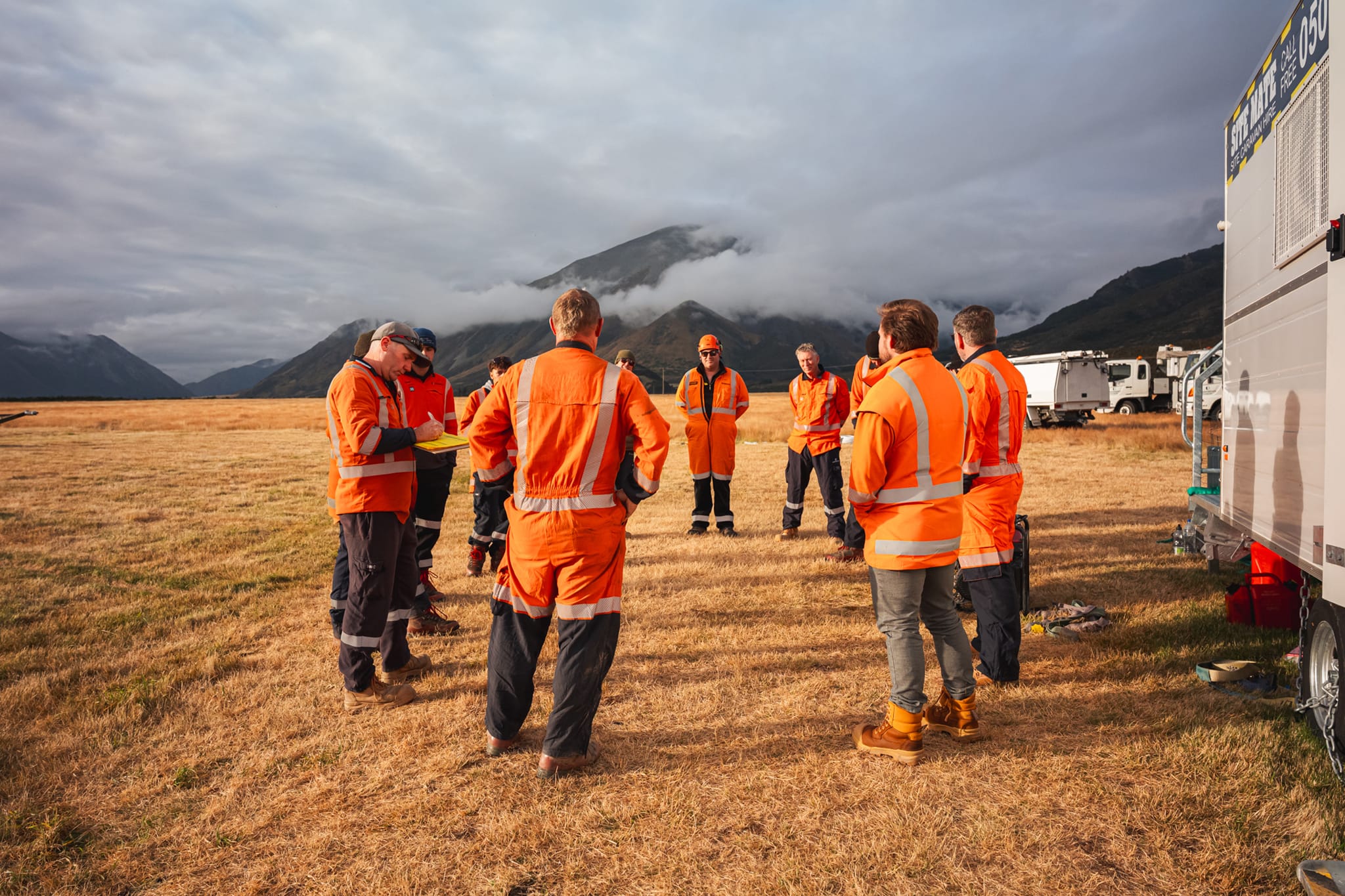
- Coordinating accommodation, transport and logistics for multiple crews working in a remote location.
Delivering in Difficult Terrain
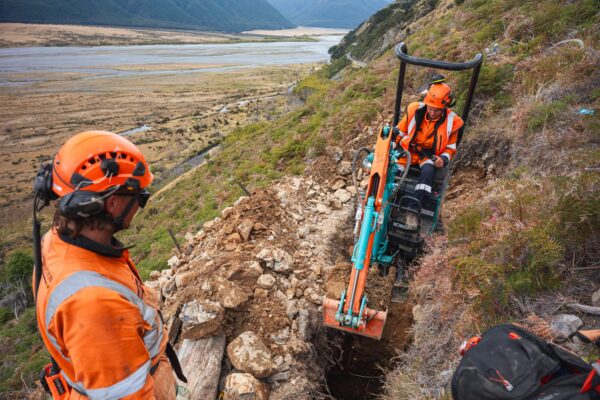
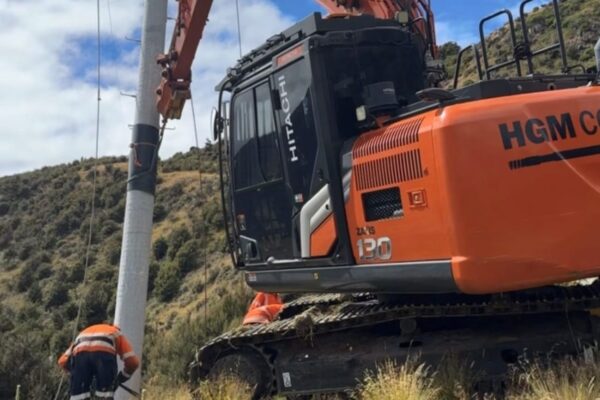
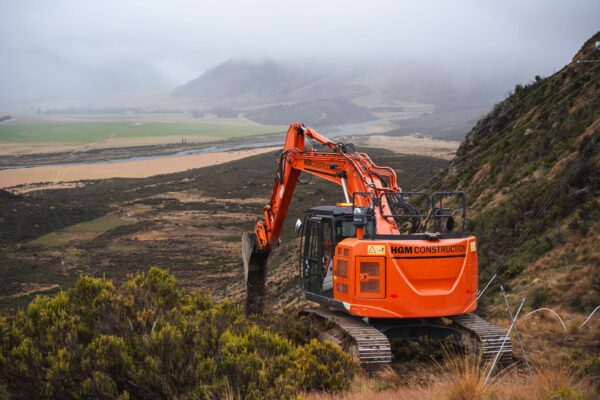
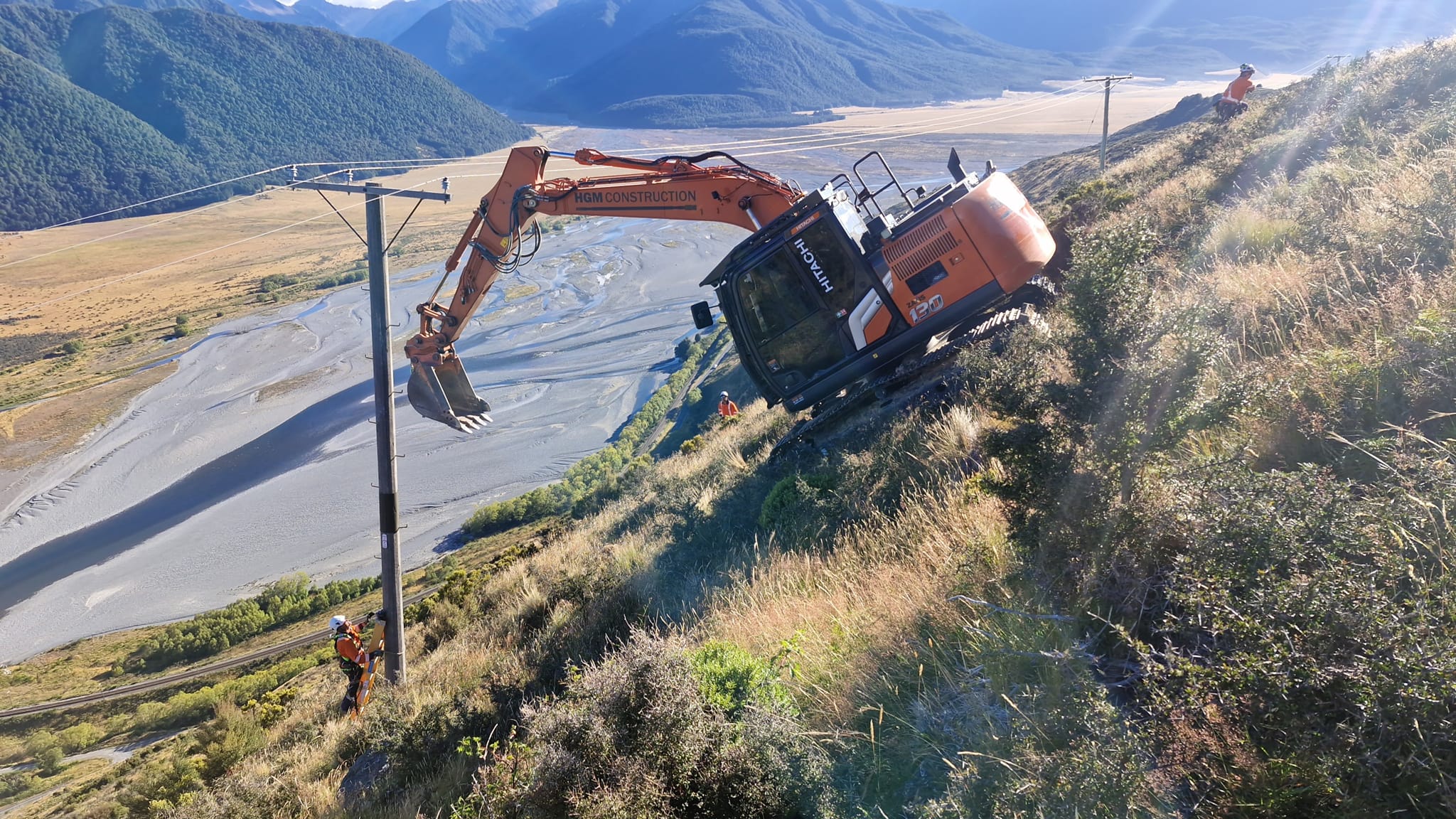
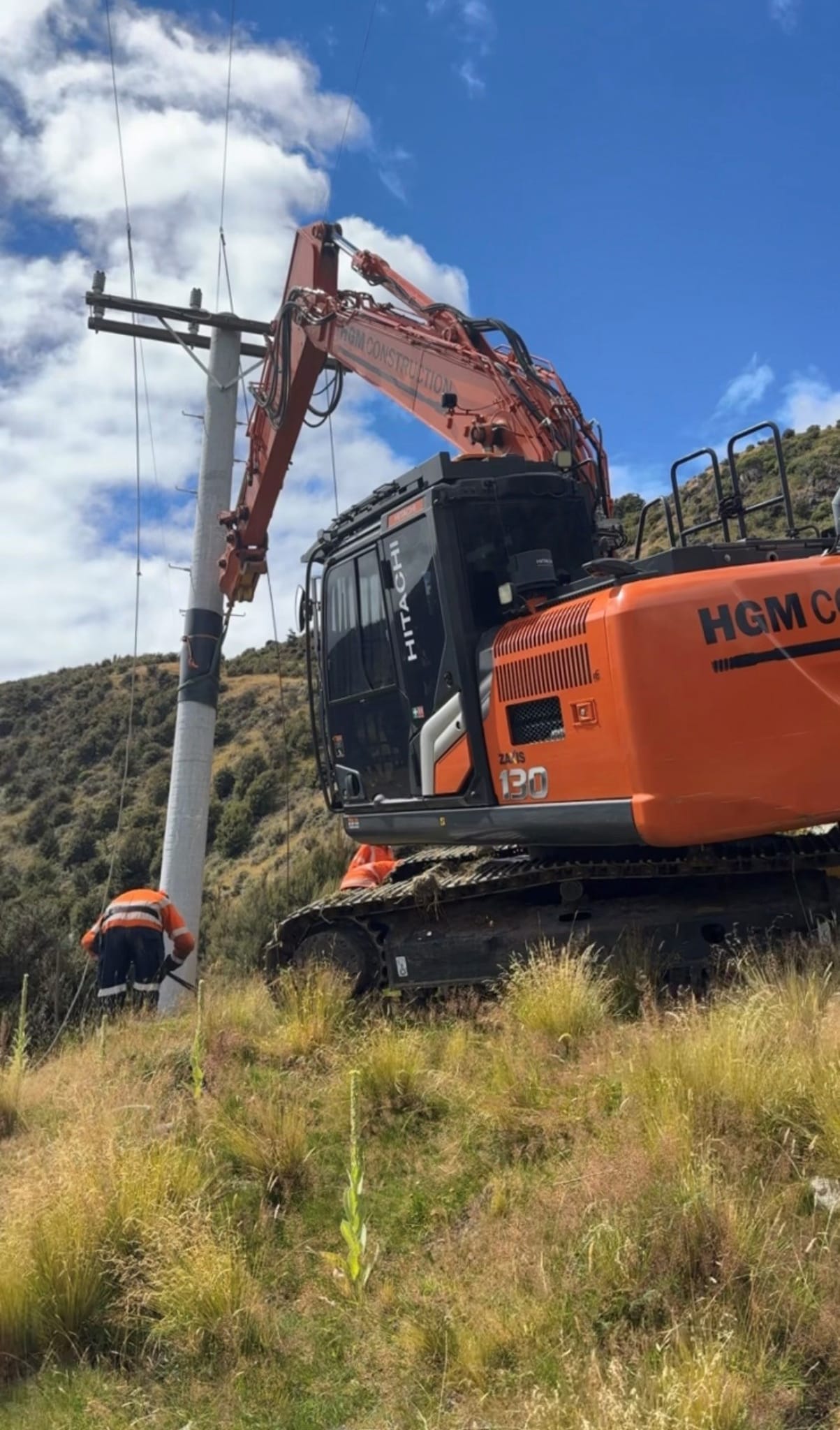
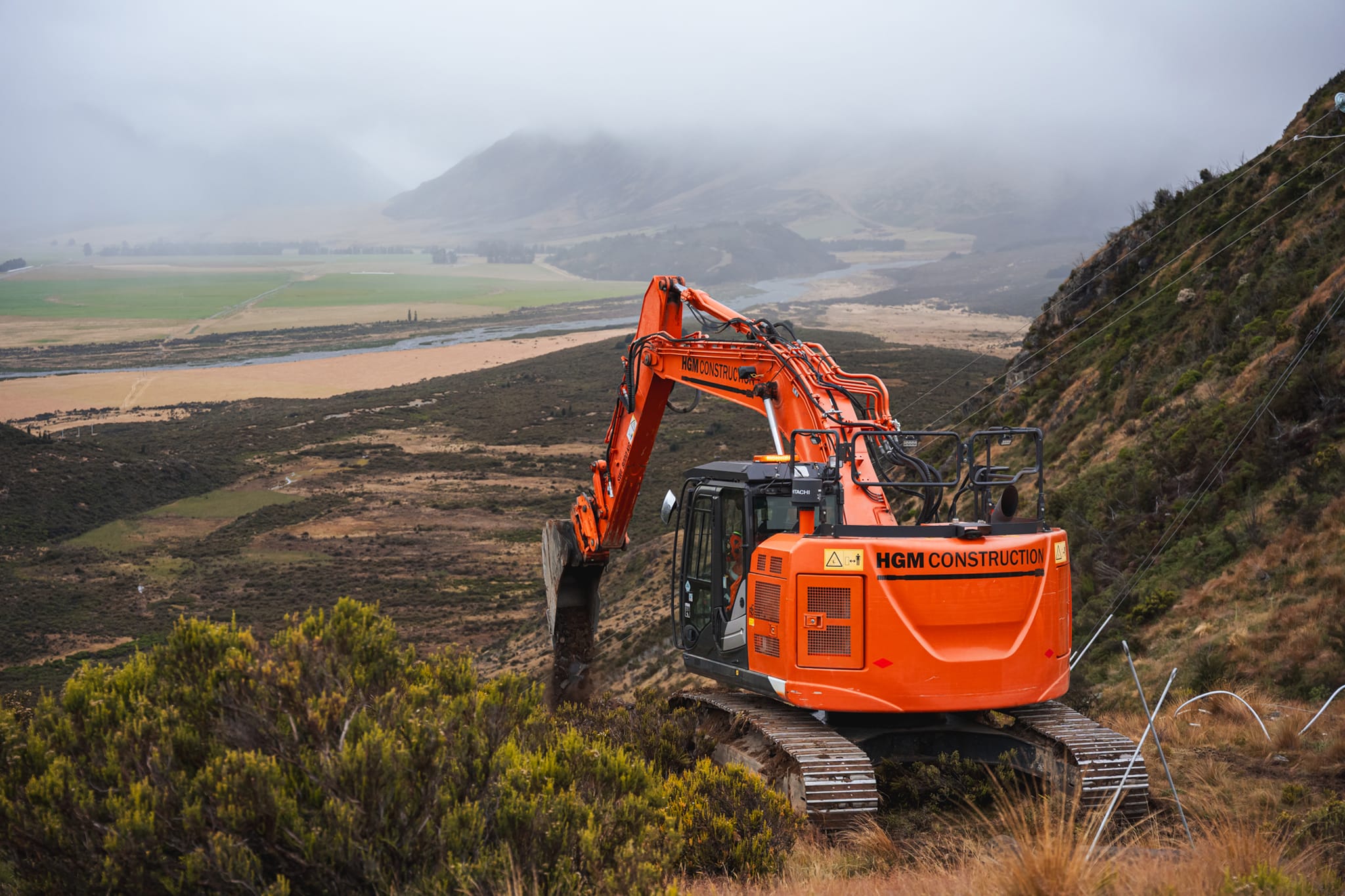
At the peak of construction, HGM deployed five excavators ranging from 1 to 22.5 tonnes across multiple work fronts along the line.
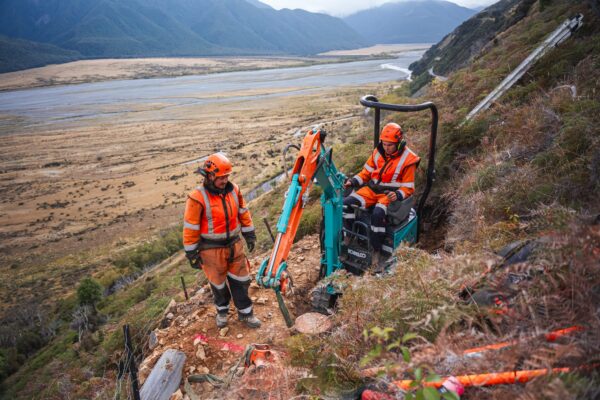
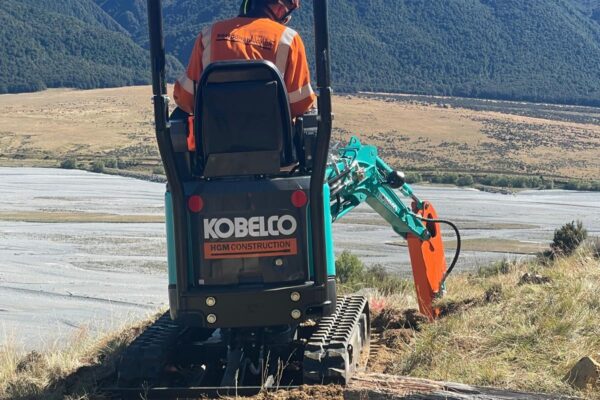
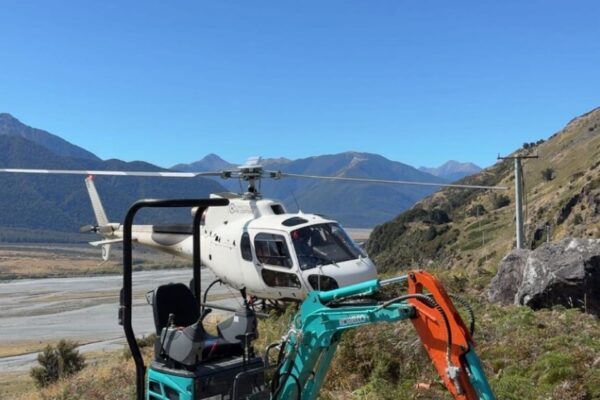
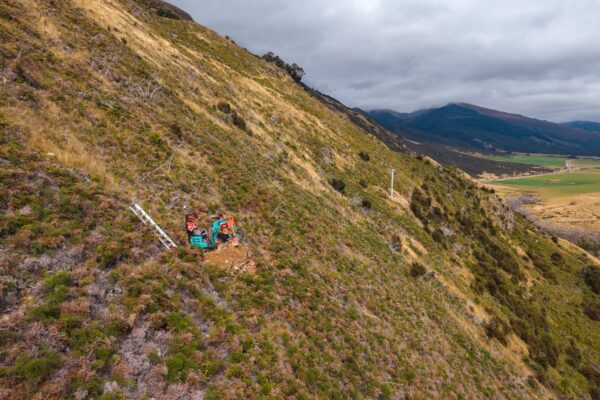
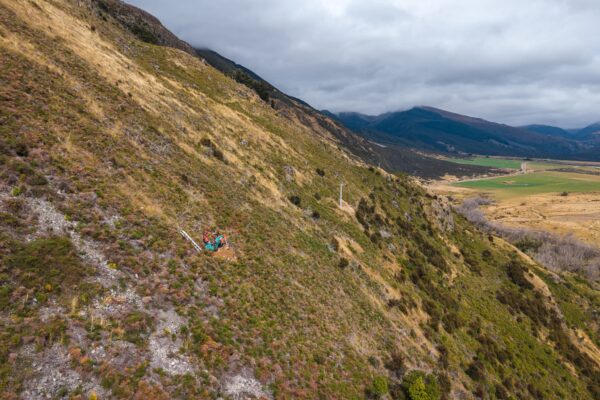
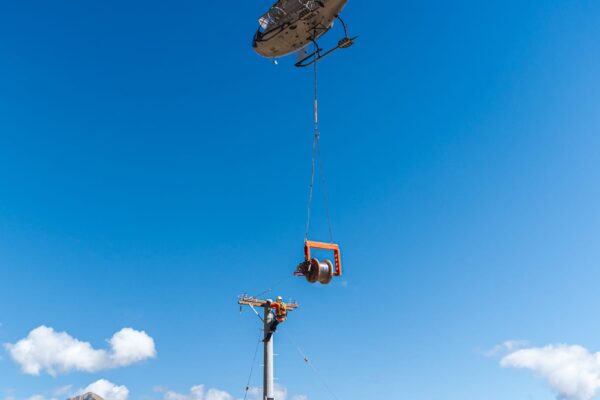
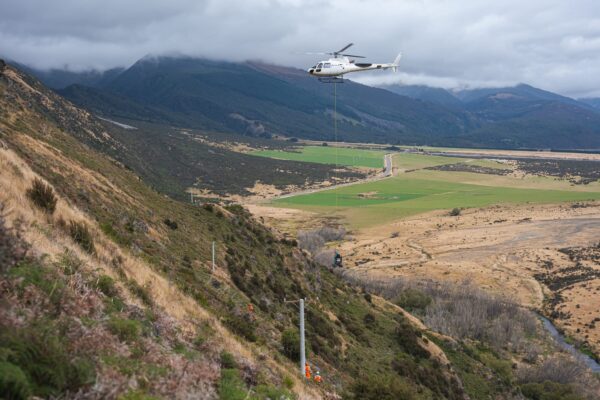
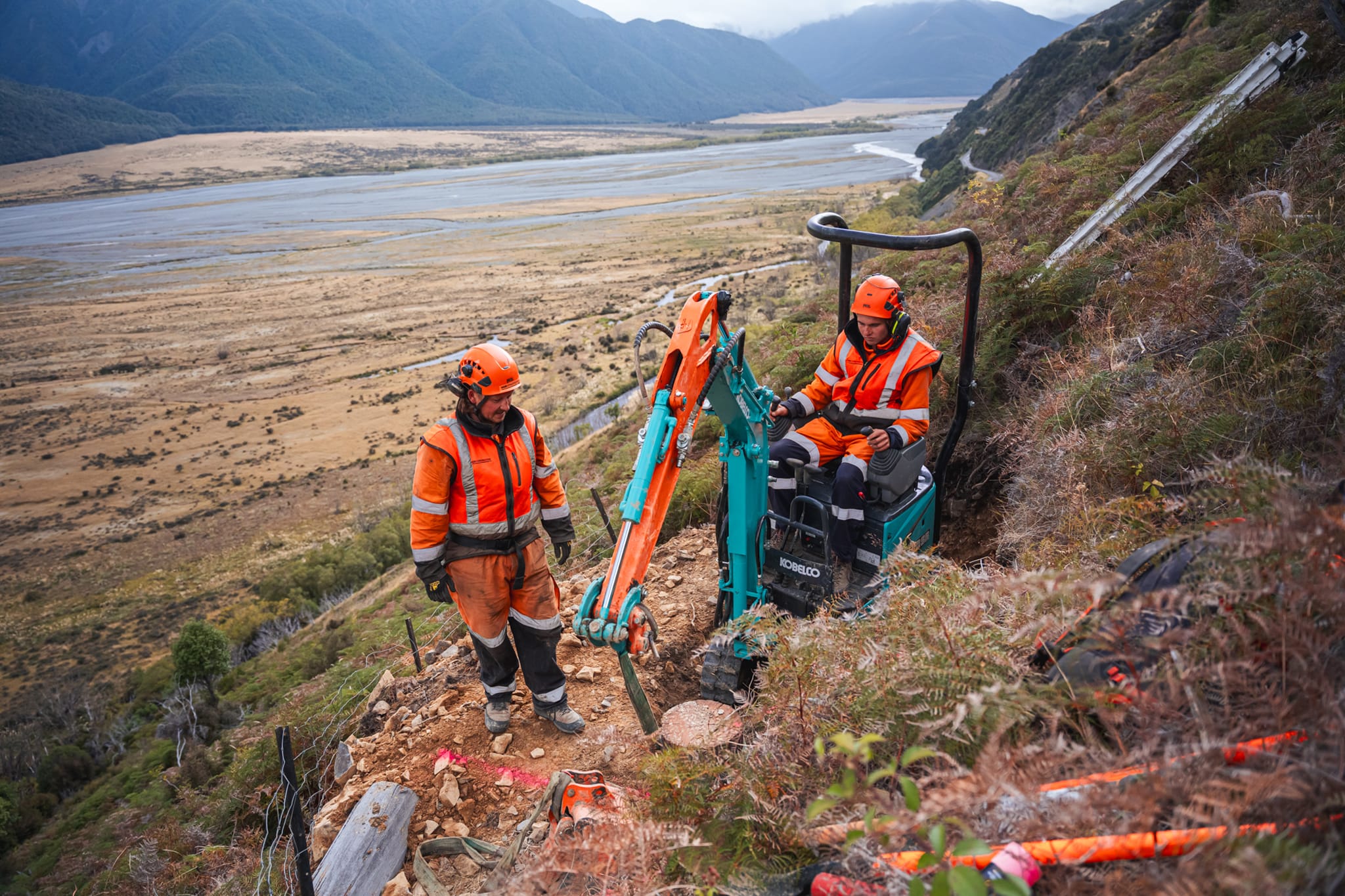
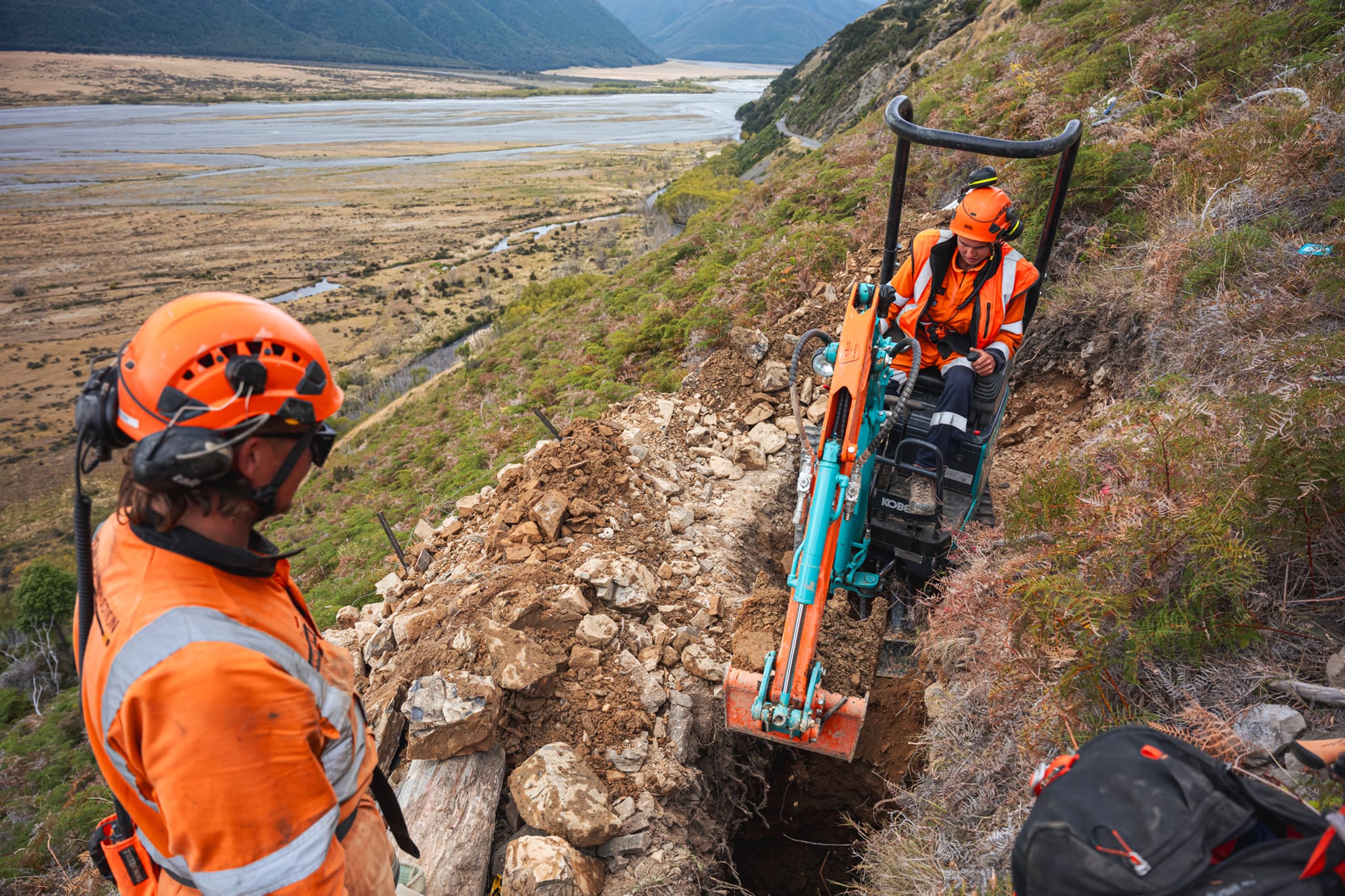
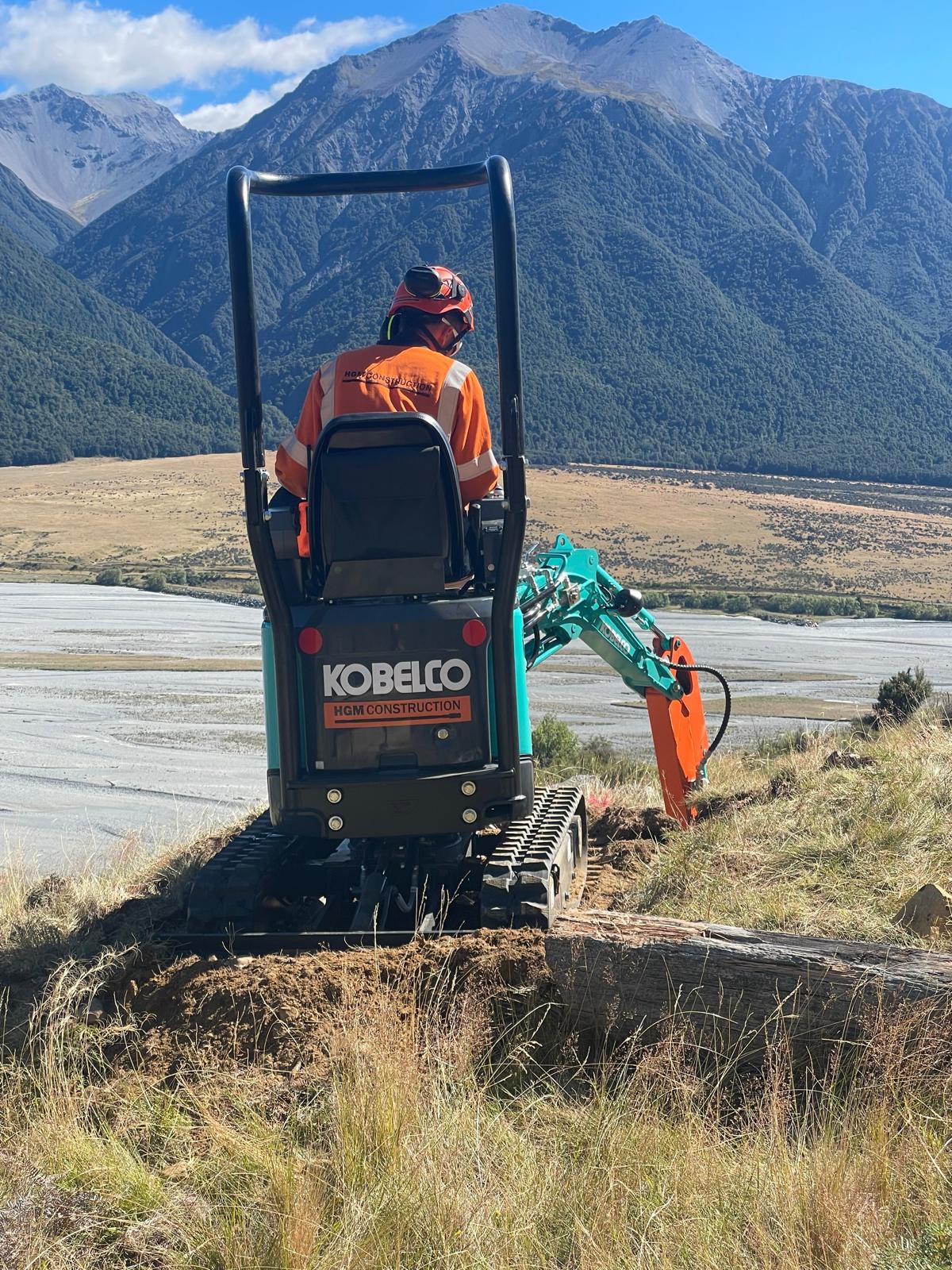
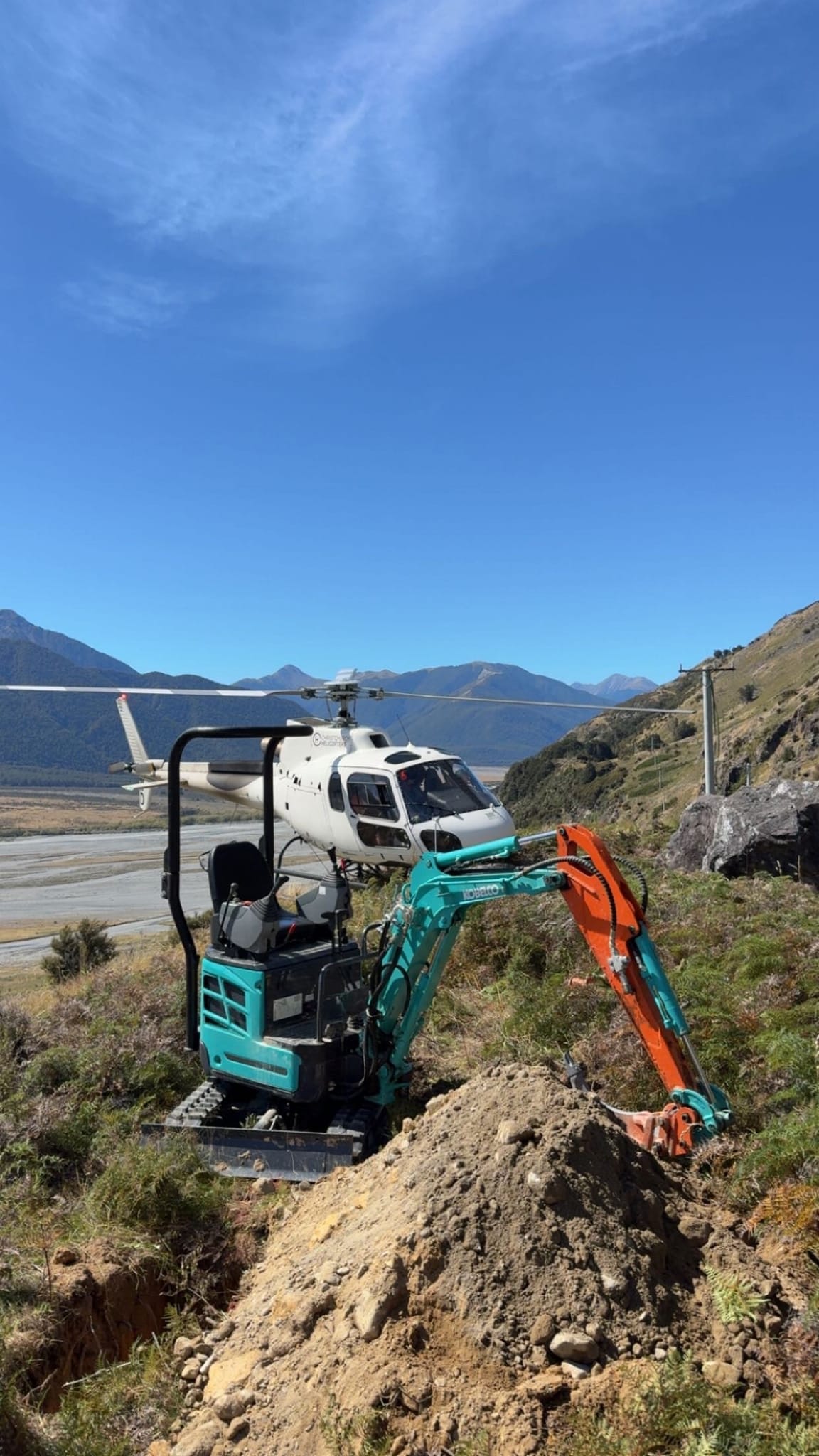
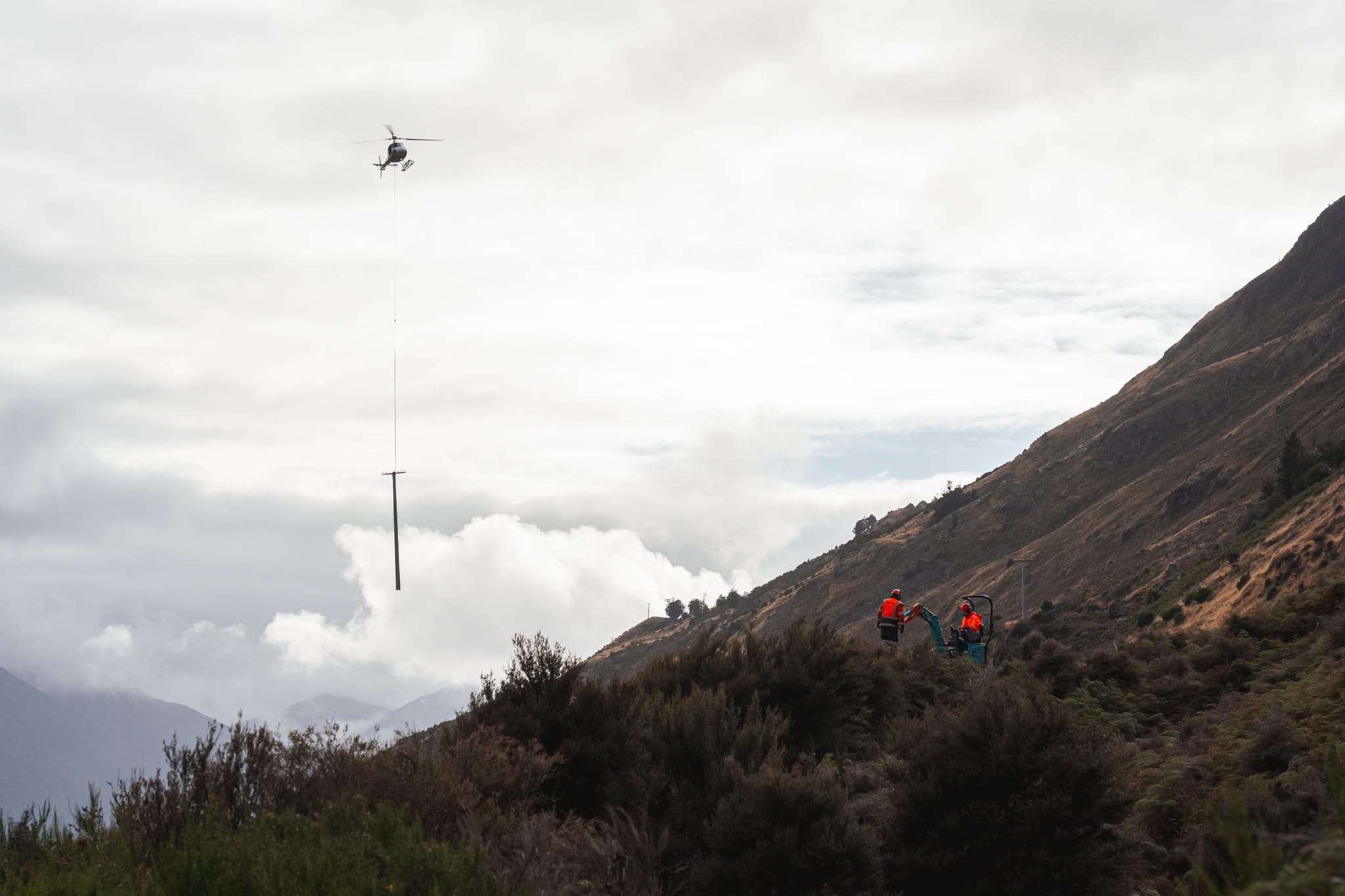
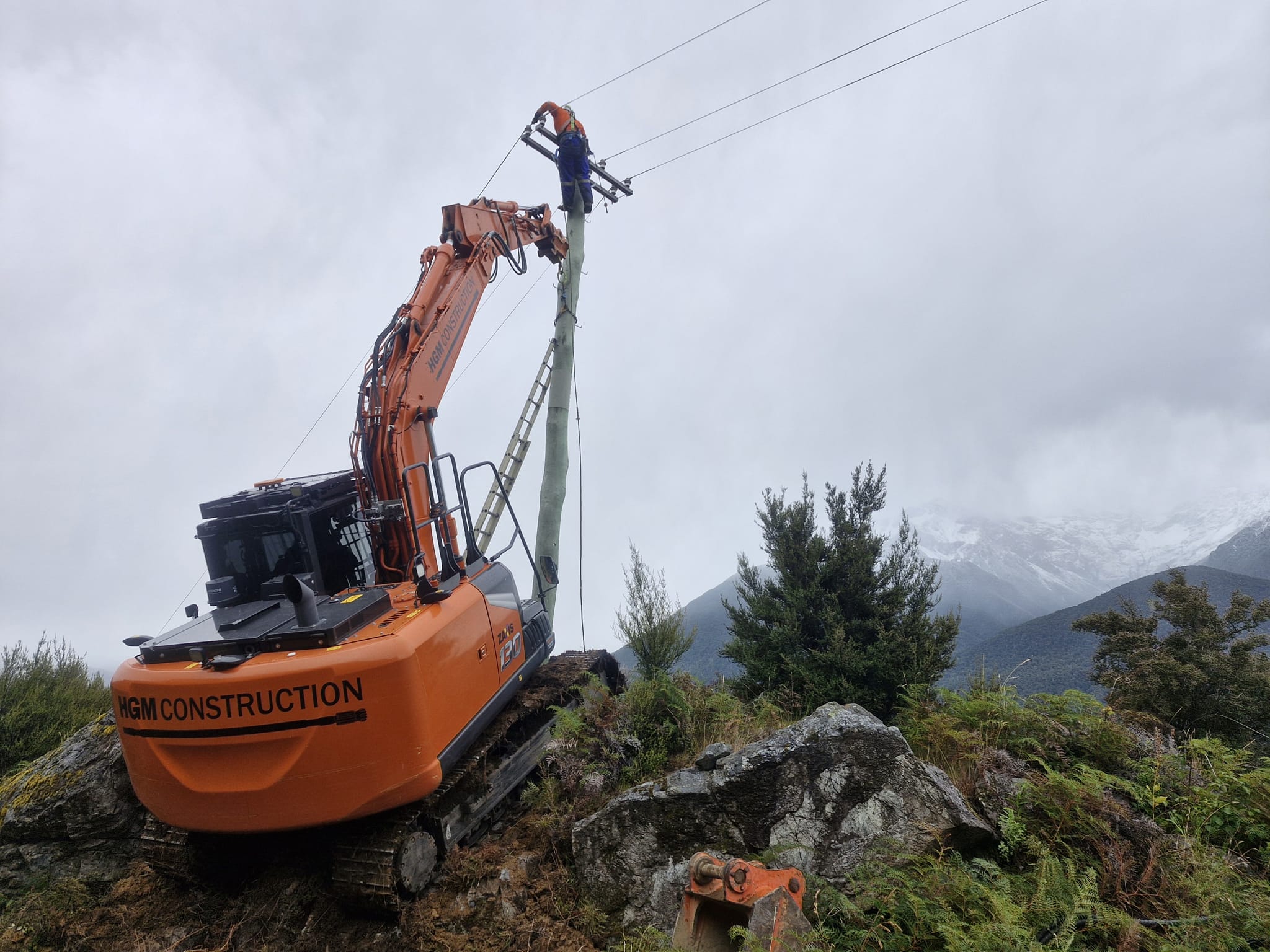
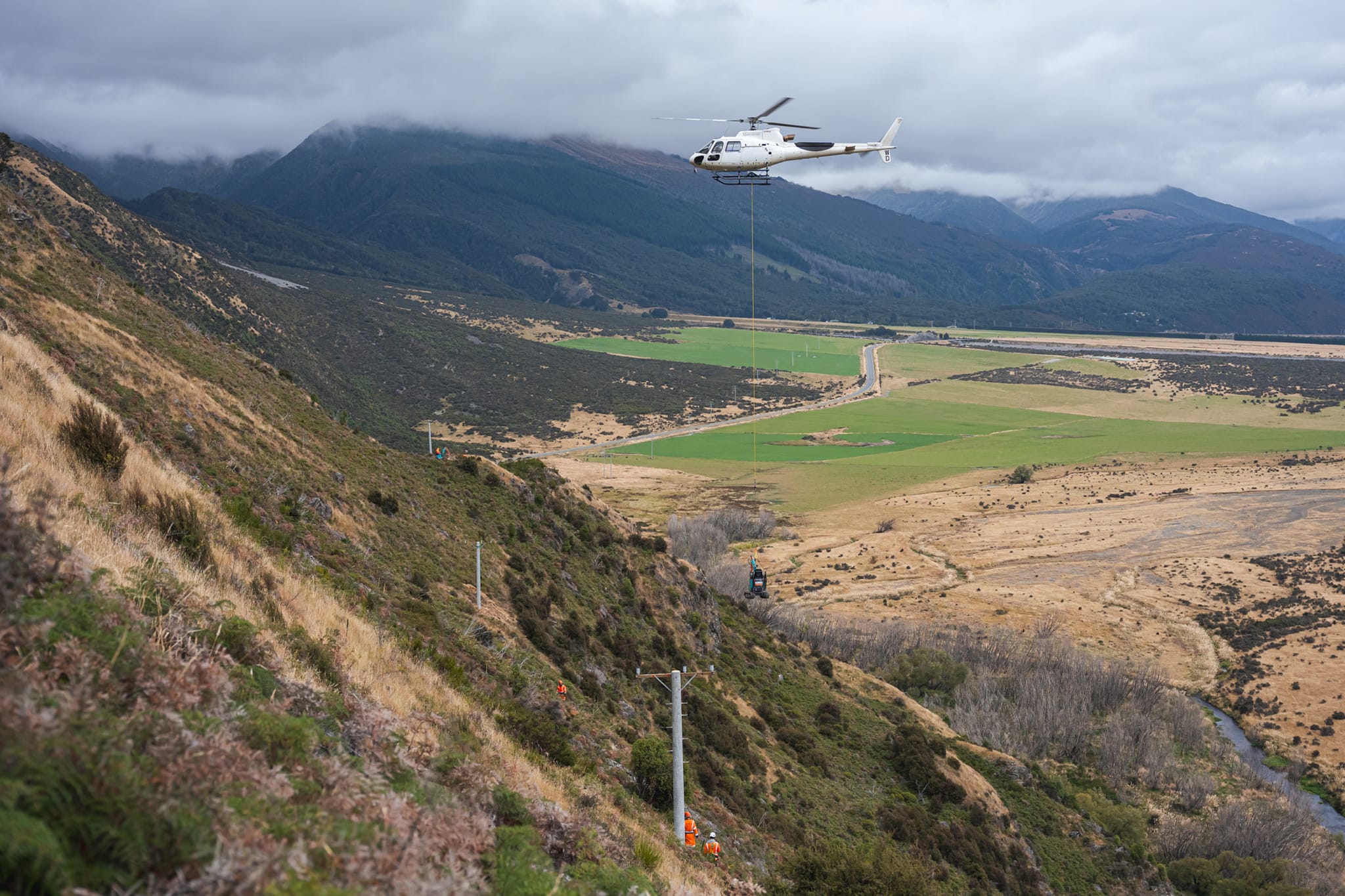
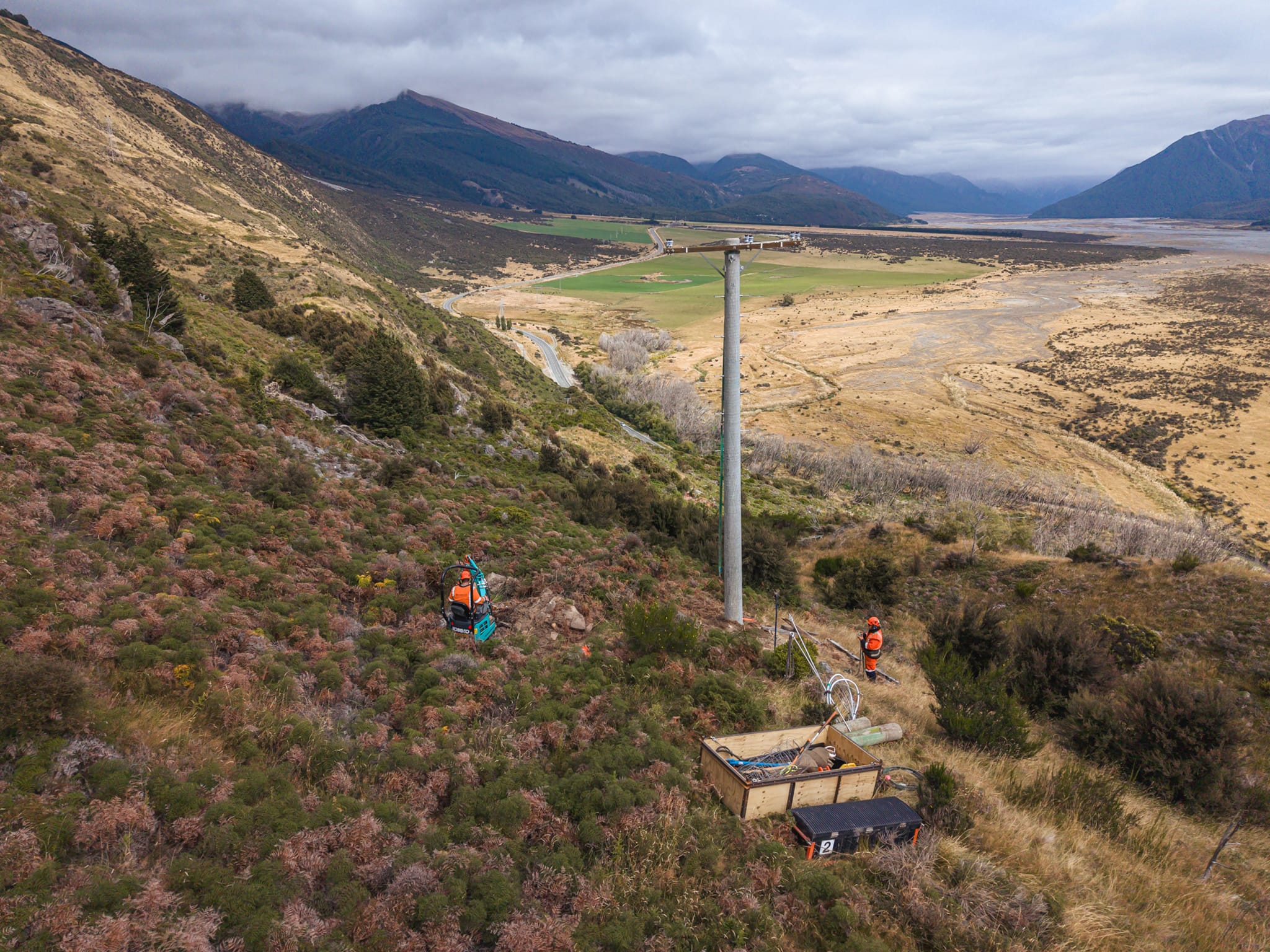
With the majority of pole sites inaccessible by conventional machinery, HGM’s civil crews worked ahead of the line mechanics to hand-bench stable working platforms into the hillside. These platforms enabled one-tonne excavators, compressors, toolboxes and other essential equipment to be flown into position by helicopter, allowing pole replacement works to proceed safely and efficiently. Where required, temporary rockfall barriers were installed below work areas to protect both personnel and surrounding infrastructure.
Several pole locations were situated above State Highway 73, requiring temporary road closures while excavators tracked between poles sites and lifting operations were undertaken. HGM worked closely with the traffic management team to carefully coordinate these closures, minimising disruption to road users while maintaining the highest safety standards.
Reliable communication across the project was another critical success factor. With little to no mobile phone coverage throughout much of the line, HGM engaged a specialist communications provider to install a temporary repeater site, providing dependable radio coverage for all crews and significantly improving operational coordination and emergency preparedness.
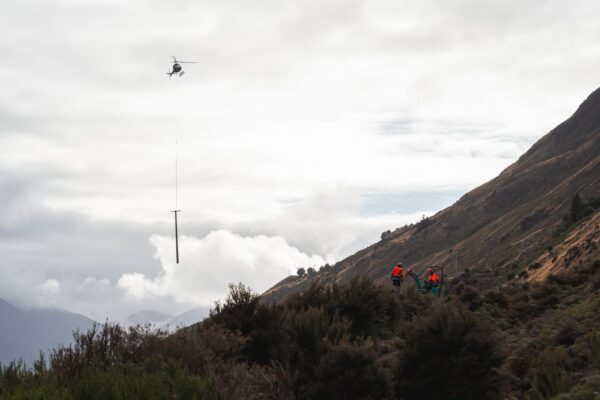
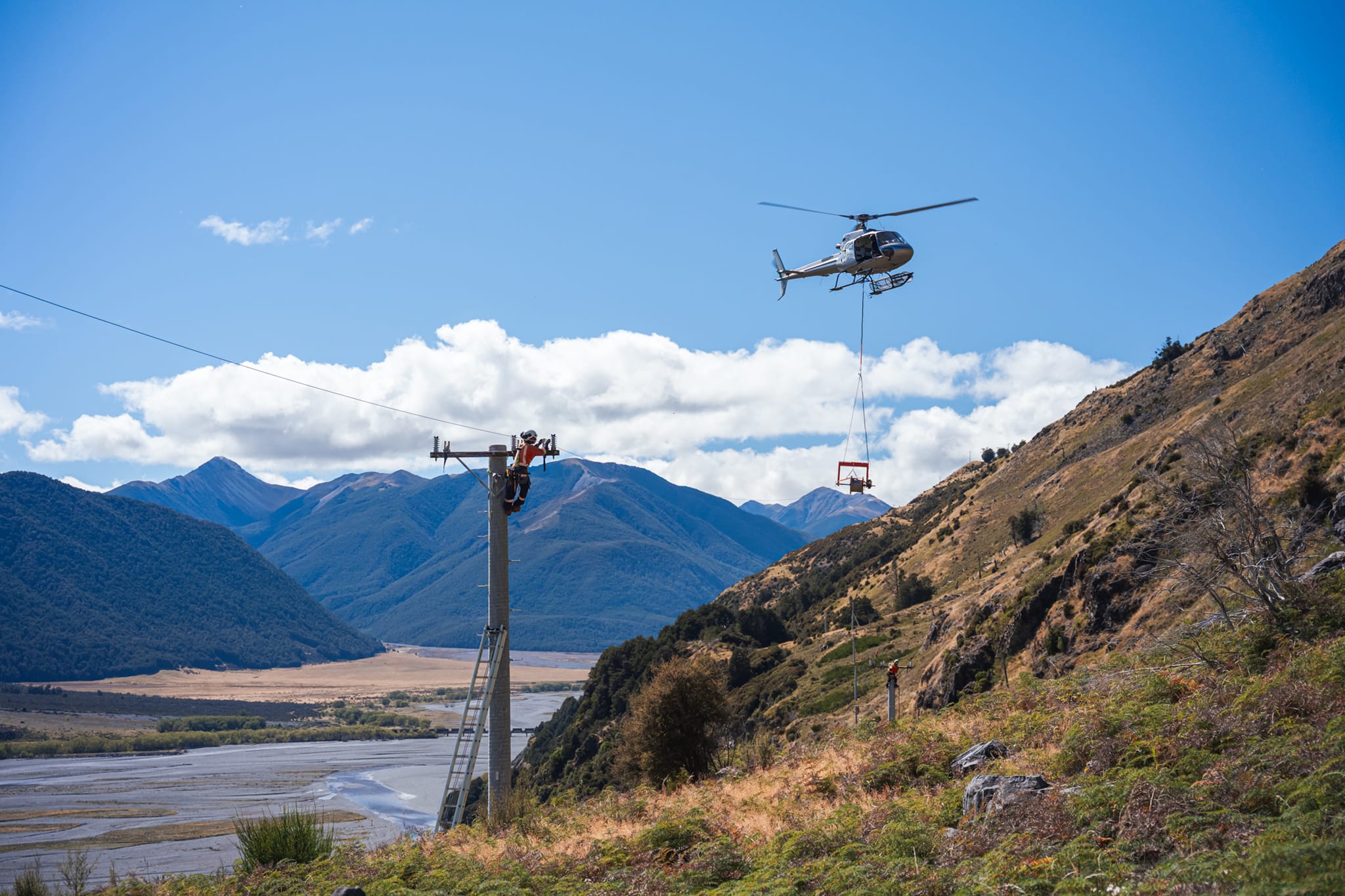
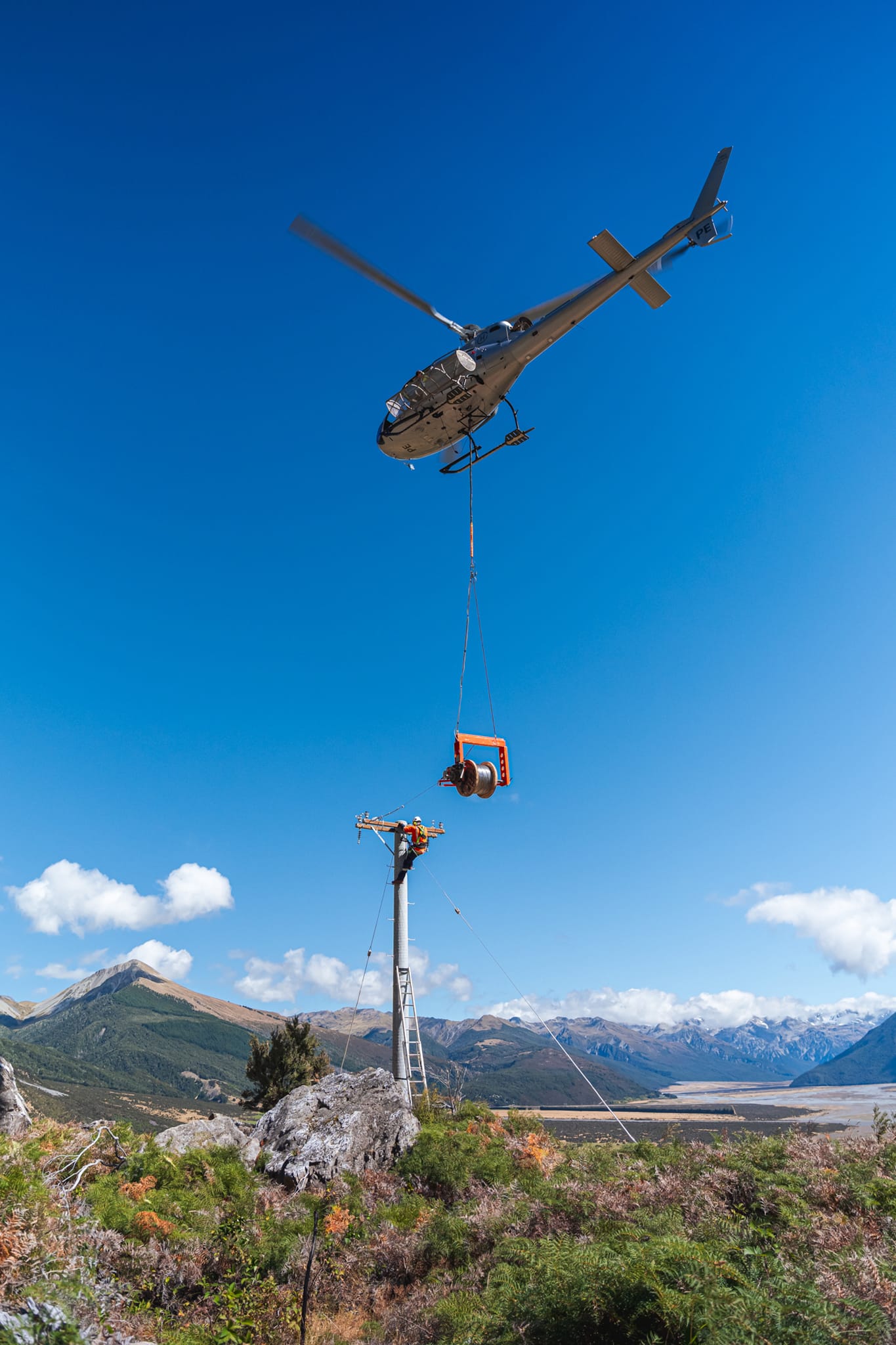
Approximately one-third of the new poles were installed by helicopter, making aviation planning and load management fundamental to the project’s success. HGM selected Christchurch Helicopters for their proven experience operating in remote, mountainous environments and collaborated closely with the flight crews to develop detailed lifting plans, communication protocols and safety procedures that ensured every lift was completed efficiently and safely.
Given the elevated wildfire risk during the height of summer, fire management remained a constant priority throughout construction. As part of HGM’s emergency response planning, Christchurch Helicopters maintained a monsoon bucket on site for the duration of the works, providing the ability to respond immediately to any fire incident. Combined with comprehensive fire prevention measures implemented across the project, this proactive approach significantly reduced the potential consequences of working in such a remote and high-risk environment.
A Collaborative Success
The Mt Horrible Line Rebuild project highlights the strength of collaborative partnerships in achieving complex projects in challenging environments. Working alongside Connetics and Orion, HGM’s experience in remote access construction, detailed planning and complex civil works played a pivotal role in overcoming the site’s significant logistical and environmental challenges.
Through careful planning, innovative construction methodologies and strong partnerships, the project was delivered safely, efficiently and within Orion’s critical outage window, helping secure a more resilient electricity network for the remote community it serves for decades to come.